
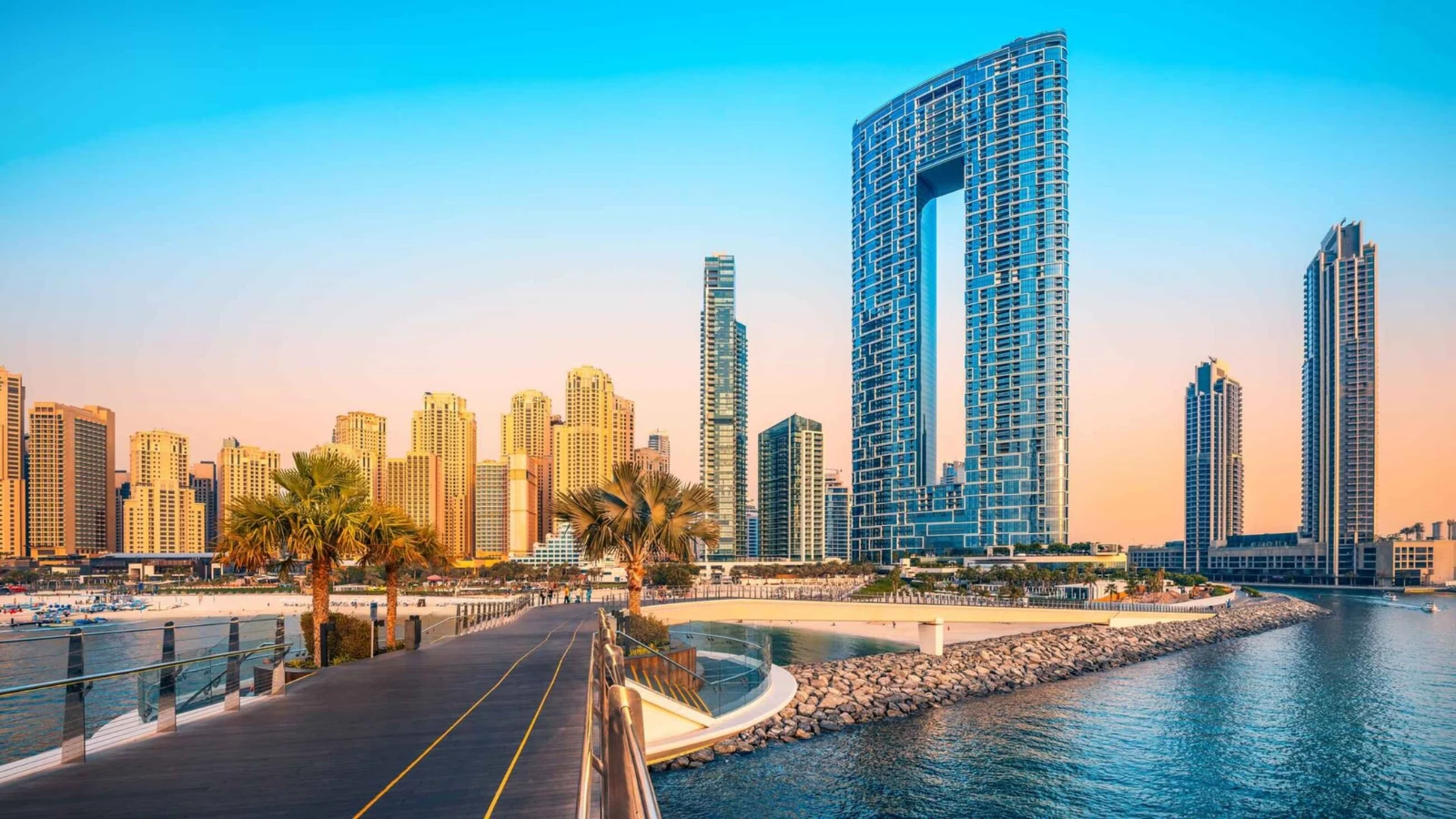
Luxury real estate in Dubai attracts buyers for many reasons. Some are looking for a permanent residence, some want a second home, and others see premium property as part of a broader investment portfolio.
For an investor, however, a beautiful property is only the starting point.
The real question is how the asset is expected to perform over time.
Dubai’s residential market remained highly active during the first half of 2026. According to Engel & Völkers, 80,509 residential properties were sold during H1 2026, with a combined value of AED 226.5 billion. Off-plan properties accounted for 71.3% of residential sales.
These figures illustrate the importance of new developments in Dubai’s property market.
But investing in luxury real estate requires more than simply choosing an off-plan project.
The first step is to define the investment objective.
There are several possible strategies:
- Long-term capital appreciation.
- Rental income.
- Personal use combined with rental income.
- Portfolio diversification.
- Shorter-term resale.
- Acquisition of a rare trophy property.
Each strategy requires a different type of property.
An investor focused on rental income may prioritize a smaller apartment in a highly liquid location.
A buyer focused on long-term wealth preservation may instead look for a rare waterfront villa or branded residence with limited supply.
The difference is fundamental.
A property can be extremely prestigious but generate relatively modest rental income.
Another property may have a less spectacular appearance but attract a much broader pool of tenants.
“In luxury real estate, the most expensive property is not automatically the strongest investment. The strategy should come before the property.”
Location is therefore one of the most important variables.
Prime areas such as Palm Jumeirah, Downtown Dubai, Dubai Marina, Dubai Hills Estate, and other established communities can have very different demand profiles.
The investor should examine not only current demand, but also future supply.
This is particularly important in off-plan markets.
A new development may look attractive when launched, but dozens of competing projects could potentially enter the same market before completion.
That is why experienced buyers analyze:
- Existing supply
- Future supply
- Developer reputation
- Construction timeline
- Payment plan
- Service charges
- Rental demand
- Resale market
- Infrastructure
- Community development
- Exit strategy
The developer is another critical consideration.
In a rapidly expanding market, delivery history matters. Buyers should examine the developer’s previous projects, construction quality, handover record, property management, and reputation among owners.
The payment structure also deserves careful attention.
Off-plan purchases may provide staged payment plans, but the investor must understand exactly when each payment is due and how the schedule aligns with their financial strategy.
Rental income is another important component.
Dubai’s rental market remained active during H1 2026, with more than 271,000 tenancy contracts registered. Engel & Völkers reported an average gross residential rental yield of 6.6% in June 2026, with apartments averaging 6.9% and villas approximately 4.5%.
These are market-level averages rather than guarantees for an individual property.
Actual performance depends on location, property quality, acquisition price, tenant demand, vacancy periods, management costs, and service charges.
Luxury properties also have another characteristic that investors should consider: liquidity.
A $10 million property does not necessarily have the same buyer pool as a $500,000 apartment.
The more expensive and specialized the asset, the more important the eventual exit strategy becomes.
This is particularly relevant for trophy properties.
Ultra-prime transactions remain an important part of Dubai’s luxury market. During H1 2026, 320 homes valued above US$10 million were sold, accounting for approximately 9.7% of total residential sales value.
Such transactions demonstrate the depth of demand at the top of the market, but they should not be interpreted as representative of every luxury property.
For investors, the key is to distinguish between market-wide trends and the economics of one specific asset.
A successful investment analysis should therefore combine several layers of information:
Market → District → Development → Property → Financial Model → Exit Strategy
Skipping any of these steps can lead to an incomplete picture.
Luxury real estate can also play a different role from traditional income-producing property.
Some buyers are primarily interested in capital preservation, scarcity, and ownership of a globally recognizable asset.
Others are focused on maximizing annual rental returns.
Neither approach is automatically right or wrong. They simply reflect different investment objectives.
Dubai’s continued development means that the luxury market is likely to become increasingly sophisticated.
More branded residences, waterfront developments, private villa communities, and ultra-prime projects are entering the market.
As choice increases, professional due diligence becomes more important.
The strongest investment decision is rarely based on the most impressive brochure or the tallest tower.
It comes from understanding why the property should remain desirable after the launch campaign is over.
Because ultimately, luxury real estate is not only about buying a remarkable home.
It is about understanding the asset behind the address.
-
Luxury real estate in Dubai attracts buyers for many reasons. Some are looking for a permanent residence, some want a…
-
For many international buyers, a luxury villa represents the ultimate form of residential privacy. Unlike an apartment, a villa can…
-
There are many ways to define luxury real estate, but few are as universal as living beside the water. Across…
We’re here to help our clients and partners – all over the world.
So let us know what you’re interested in, or what you’re looking for, and we’ll get back to you shortly.